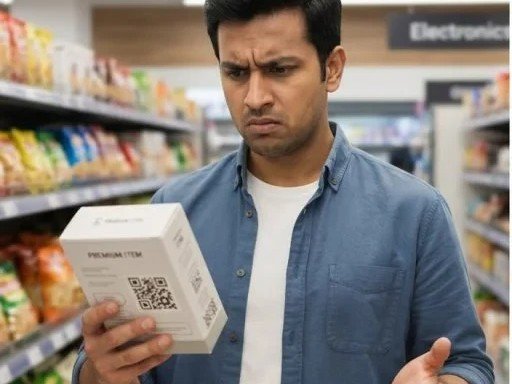
Sell only through a distribution channel and you know the channel inside out and the customer not at all. Every dealer, every order, every consignment is on your system. The person who actually opens the pack never appears on it.
What gets discussed far less is that the same wall stands in the other direction. Your customer cannot reach you either — and that is the half that costs you the sale.
The questions nobody answers
Somebody is standing with your product in one hand and a phone in the other, wanting to ask you something:
- Is this genuine, or a refilled empty?
- How much do I use, and how?
- Is it under warranty, and how do I claim it?
- This one is damaged. Who do I tell?
What is actually available to them? A toll-free number printed on the back that rings in an office which closed at six. A website with a contact form. A shopkeeper who did not make the product and cannot answer for it.
Nobody complains to a brand they cannot find. They simply buy a different one next time.
That is the quiet loss. It never arrives as a complaint, only as a soft month in secondary sales that nobody can explain.
One scan: the answer, and a way to reach you
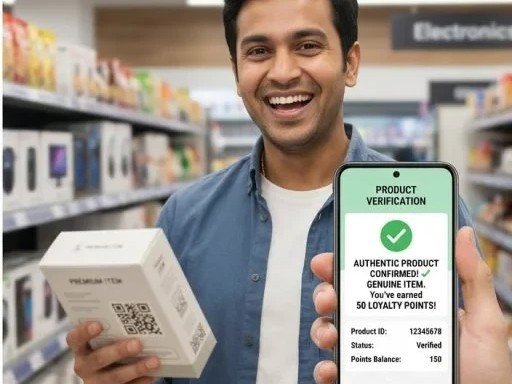
The pack is the one thing that reaches every buyer, so a code printed on it is the only route that works without knowing who they are. They point the camera. No app, no account, nothing to sign into. What opens is your page, about this exact unit: genuine or not, which batch, packed when, how to use it, what the warranty covers — registered there and then, with no paperwork to keep.
Why it has to be a different code on every pack
Make the code unique per unit and it already knows its own SKU, batch, line and run date. That is the same code TraceGuard and SupplySight read — one code on one pack, not a separate thing to buy.
A way to reach you, instead of a dead end
Underneath the answer sits the thing the printed helpline never delivered: a way to talk to the people who made it. A tap-to-chat link opens WhatsApp with the pack’s own code already in the message. A complaint or a photograph of a damaged seal arrives tagged with the batch and the SKU. Nobody is asked to find a reference number, because the code is the reference number.
The two routes, side by side
| The customer wants to… | Printed helpline or web form | Scan the code on the pack |
|---|---|---|
| Start the conversation | Find the number, call inside office hours, explain which product it is. | Point the camera. No app, no account, any hour of the day. |
| Get an answer | Reach somebody who has no record of the pack in front of them. | The page for that exact unit: genuine or not, batch, usage, warranty. |
| Report a problem | Read out a batch code, if it can be found and still read. | The code travels with the message, photograph of the seal attached. |
| Leave you something | A call log, if anybody writes it down. | Unit, SKU, batch, place and time, already in your system. |
Complaint, feedback, call back, chat
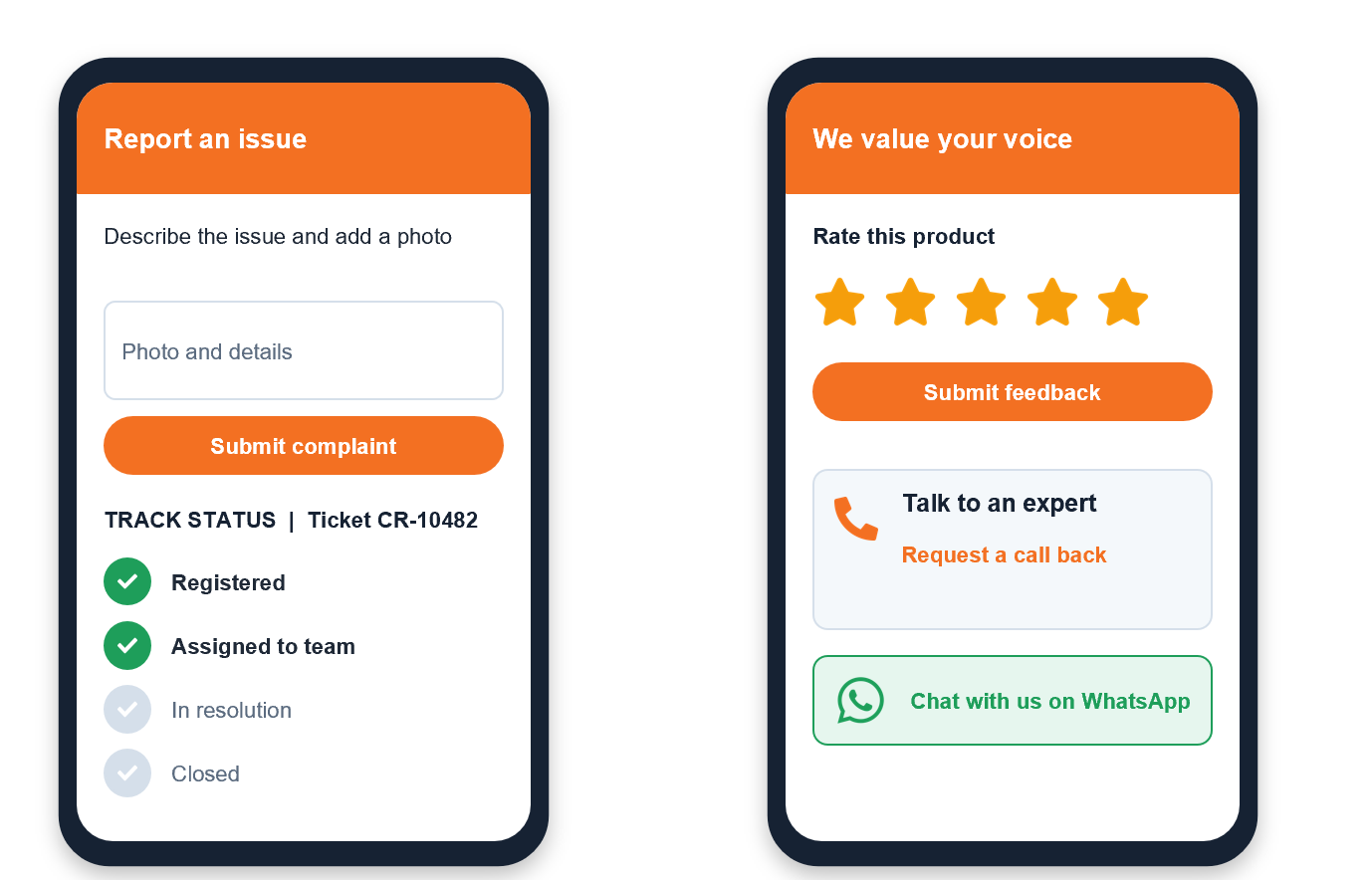
What the scan opens is yours to decide, and the version that earns its place does four plain things. It takes a complaint with a photograph attached and hands back a ticket the customer can follow, so nobody is left wondering whether it was heard. It asks for a rating while the product is still in their hand. It offers a call back for the people who would rather talk. And it puts a WhatsApp thread one tap away, already carrying the code.
Nobody loses the distributor to get this
They keep the order, the margin and the shelf. What changes is that the buyer finally has somewhere to go, and you finally know who is at the end of the chain — which is what WarrantyOne, LoyaltyLoop and ReOrderNow are for. A customer who can reach you is a customer who tells you what is wrong instead of leaving.
No scan rates or response rates are quoted here, because the published ones differ by an order of magnitude depending on who paid for them — see our piece on feedback. The only number worth having is the one from your own first SKU.
Frequently asked questions
Does the customer need an app to scan it?
No. Any current phone camera reads the code and opens an ordinary web page. There is nothing to install and nothing to sign into, which matters because the person scanning is standing in a shop or a field, not at a desk.
What stops somebody copying the code onto a fake pack?
A printed code is not a security chip, and anyone saying otherwise is selling something. What a unique code gives you is a pattern: the same unit scanned in two districts in one week is visible, where a single repeated QR image is not. That is the work TraceGuard does.
Do we have to go around the distributor to do this?
No, and you should not want to. The distributor keeps the order, the margin and the shelf. The code only adds a line between you and the person who ends up holding the pack, which is a relationship the channel was never carrying anyway.
What does it take to print a different code on every pack?
Not a re-tooling project. PackSense provides the marking hardware and the software as one thing, commissions it onto the line you already run, and bills on codes actually printed rather than as a licence.