Serialisation and authenticity for pharmaceutical brands.
If you make vaccines, antimicrobials, anticancer drugs or anything scheduled under the NDPS Act, Schedule H2 now applies to you. It used to be 300 named brands. Your first deadline is 1 July 2027.
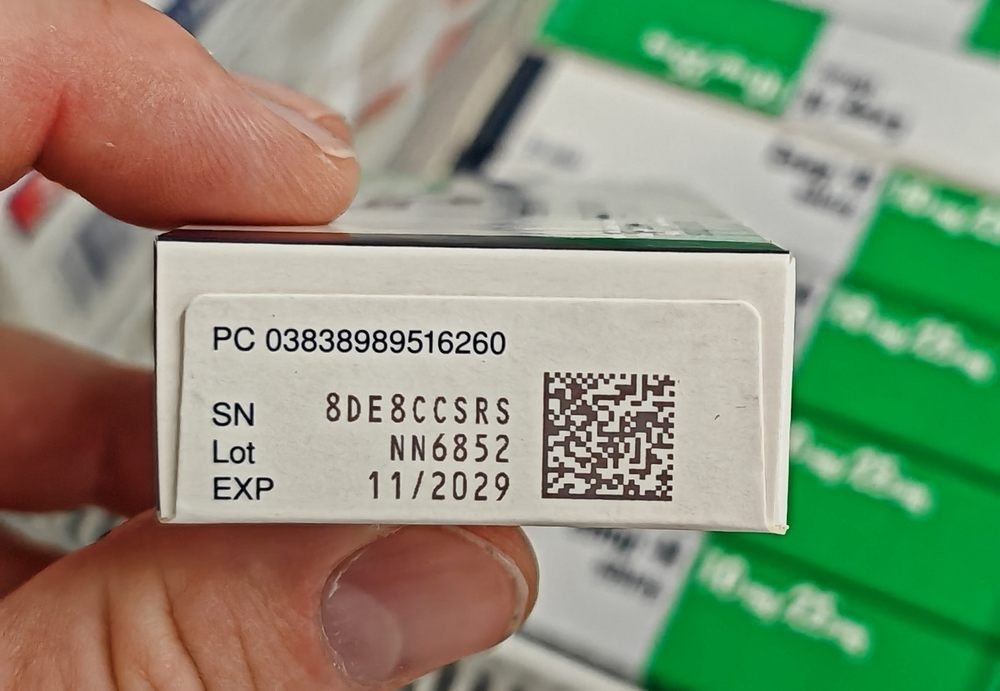
The QR code rule got much bigger in June 2026.
On 22 June 2026 the Health Ministry notified G.S.R. 506(E). Schedule H2 stopped being a list of 300 named brands and became four whole therapeutic categories, so a company that had never thought about serialisation is now in scope with a date attached. Those 300 brands still apply. So does everything below.
Vaccines
1 July 2027All vaccines, scheduled and non-scheduled.
Anticancer medicines
1 July 2027Cytotoxic and targeted oncology formulations.
Narcotics & psychotropics
1 July 2027Everything scheduled under the NDPS Act, 1985.
Antimicrobials
1 July 2028Antibiotics, antivirals, antifungals and antiparasitics.
This is a summary to get you oriented, not legal advice. Check your own position against the notification and with whoever advises you on drug regulation.
Why the rule exists.
Counterfeiting, compliance and recalls. Manufacturers usually come to us about one of the three and stay for the other two, because the same code on the same pharmaceutical packaging answers all of them.
Counterfeit medicines
A counterfeit pack that reaches a patient is a safety incident. Give every unit its own code and a pharmacist or a patient can check it before anyone takes it.
Schedule H2 compliance
Eight data elements have to be readable from a code on the pack before your category's deadline. Blister foil counts as much as the carton.
Recall traceability
A recall without unit-level coding is a paper chase across distributors. With it you pull one batch and see where those units actually went.
The eight things the code has to carry.
Schedule H2 specifies the data elements a bar code or QR code on the pack must make available. All eight, on every pack in scope.
Assembling the data is the straightforward half. Printing a readable code onto blister foil at line speed is the part that takes real work.
- 01 Unique product identification code
- 02 Proper and generic name of the drug
- 03 Brand name
- 04 Name and address of the manufacturer
- 05 Batch number
- 06 Date of manufacture
- 07 Date of expiry
- 08 Manufacturing licence number
Serialisation without a new packing line.
One code per pack, carrying the data the rule asks for, printed by equipment you already own. Patients get authentication. You get batch traceability and something to work with the day a recall lands.
A unique code on every pack
Non-sequential codes generated at source, so a code cannot be guessed from the one before it.
Unit and batch serialisation
Every unit carries its own identity, and every unit is tied to its batch for recall.
Printed on the line you already run
Cartons, foil, blister laminate and labels, via flexo, offset, digital or inkjet. No new packing line.
Patient verification by phone
A scan returns a genuine or suspicious result. No app to install.
Where every scan happened
Scan locations on a map, with duplicate-scan clusters flagged.
Batch-level recall support
Isolate an affected batch and see where those units were scanned.
QR code, barcode or data matrix?
Schedule H2 asks for a bar code or a quick response (QR) code. Either satisfies the rule, provided the required data is available from it.
Printable area decides it. A folding carton has room to spare. A blister foil or a small vial label does not.
QR code
Holds the most data for its size and every phone camera reads it without an app. The usual choice when a patient is meant to scan the pack.
Linear barcode
Familiar and cheap to print, but wide, and it carries far less. Fine for a batch identifier, awkward for eight data elements.
2D data matrix
Tiny, and it still reads when the print is imperfect, which is why serialised export packs use it. Wants a scanner or an app rather than a plain camera.
Where pharma usually starts.
All six modules read the same code on the pack. For a pharma manufacturer two of them do most of the work. Turn the rest on if you ever need them.


Nine months of work, not nine weeks.
That is your side of it, not ours.
Putting a code on a pharmaceutical pack touches artwork and repro, the packing line, QA and validation, and any third-party manufacturer making your product. Each of those has its own approval cycle, and they tend to queue rather than overlap.
Generating the codes and getting them printing is not the long pole. Artwork sign-off, line validation and your contract manufacturer's schedule are. The companies that will find 1 July 2027 comfortable are the ones who start while there is still slack in those queues.
Where you already print variable data on the line, it is a much shorter job. Tell us what your packs look like and we will say which of the two you are.
Common questions about Schedule H2 and QR codes.
Which drugs need a QR code in India?
Under Schedule H2 of the Drugs Rules, 1945, as amended in June 2026: all vaccines, all antimicrobials, all narcotic drugs and psychotropic substances, and all anticancer medicines. The existing Table 1 list of 300 brands continues to apply alongside them.
When is the Schedule H2 deadline?
1 July 2027 for vaccines, narcotics and psychotropic substances, and anticancer medicines. Antimicrobials have until 1 July 2028.
What data must the QR code on medicine packaging contain?
Eight elements: a unique product identification code, the proper and generic name of the drug, the brand name, the manufacturer’s name and address, batch number, date of manufacture, date of expiry, and the manufacturing licence number.
Is a barcode or a QR code required?
Schedule H2 refers to a bar code or a quick response (QR) code, so either satisfies the rule provided the required data is available from it. In practice the choice is driven by how much printable space the pack has and what your existing line can print.
Can a code be printed on blister foil?
Yes, and it is usually the hardest surface on the pack rather than the carton. Foil is reflective, the print area is small and the web moves quickly, so code size and contrast have to be proven on your own material before a line is committed.
Does this cover pharmaceutical exports?
No, and the export position changed recently. DGFT withdrew its own track and trace requirement for drug exports on 31 January 2025, moving responsibility to the Ministry of Health and Family Welfare under the Drugs Rules. Exporters have historically had to meet GS1 identifiers, multi-level coding and parent-child aggregation, and destination markets still impose their own rules. This page covers the domestic Schedule H2 requirement only. Talk to us about export SKUs separately.
Will adding a code slow the packing line?
It should not. Codes are generated ahead of the run and printed inline by the equipment you already use, whether flexo, offset, digital or inkjet. Verification happens in line too. The effort goes into artwork, integration and validation, not throughput.
General guidance, not legal advice. Confirm your own obligations against the notification and with your regulatory adviser.
Start with one SKU. We print codes on your own carton or foil so you can check readability and verification on real packaging before you commit a line to it.
Talk to us about your SKUs.
Tell us which categories you make and what your packs look like. We will tell you what coding them actually involves.