QR code printing on shrink sleeves and BOPP sacks
A barcode that prints well on a carton will fail on a shrink sleeve. What works on a BOPP woven sack works on neither. Every material fails in its own way. Below is what goes wrong on each one, and what we do about it.
Your printer cannot give you a different code on every pack
Gravure, flexo and offset print from a fixed cylinder. Same image, every pack, millions of times. That is what makes them cheap, and it is why a unique QR code has to come from somewhere else.
That somewhere else is us. We bring the printer, fit it to the line you already run, and run the system that gives every code its identity. One price, per code printed.
Shrink sleeve labels
For bottles. PVC, PETG, OPS and PLA film
Hardest surface we print on
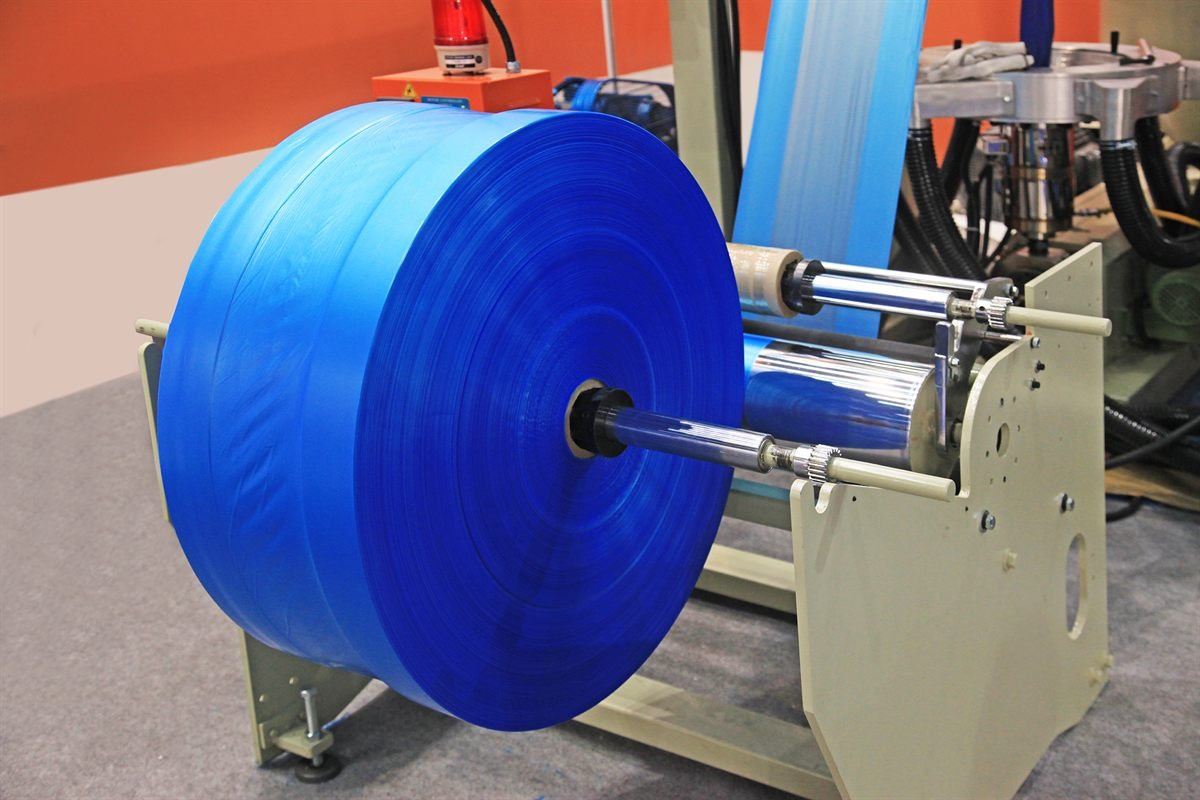
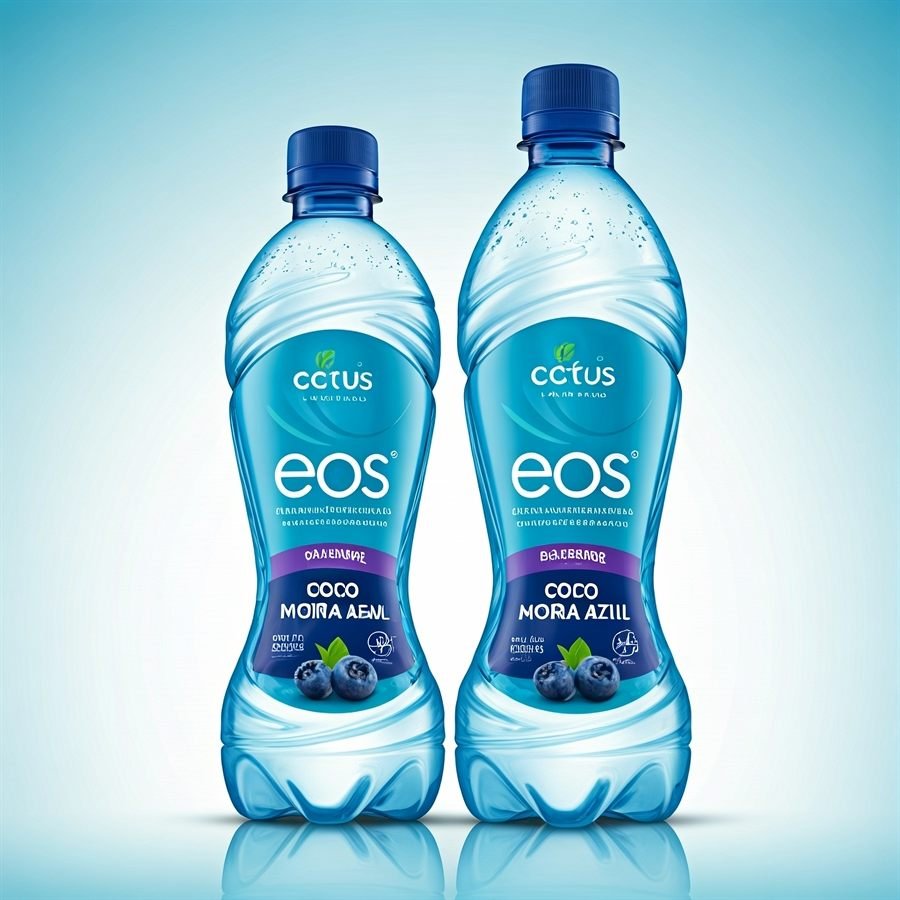
The hardest surface we print on. Two things cause most of the trouble: the film does not absorb ink, and the codes go on a moving roll.
What goes wrong
- PVC does not absorb ink. The surface is non-porous, so the ink sits on top and has to hold there on its own.
- Wet ink marks the next wrap. On a fast roll, ink that has not dried presses onto the film wound against it. You only see it when the roll is opened.
- The film shrinks 55 to 78 per cent, one way only. Square blocks in the QR code come out as rectangles.
- Turning the code does not help. That trick works on a barcode. A QR code carries information in both directions.
- Ink cracks as the film shrinks. If the white layer under the code cracks, the code stops reading.
What we do
- We match the ink to your film. And prove it on your material before the line is committed.
- We set the line speed so the ink dries. Fast enough to be worth running, slow enough that the roll is safe to wind.
- We size and place the code for your shrink. Based on what your film actually does, not a figure from a datasheet.
- Batch and filling date join later. They come off your filling line into our system. Nothing extra is printed at filling, and no second coder goes on the line. The customer sees all of it on scan.
BOPP woven sacks
Fertiliser, cement, rice, seed and cattle feed
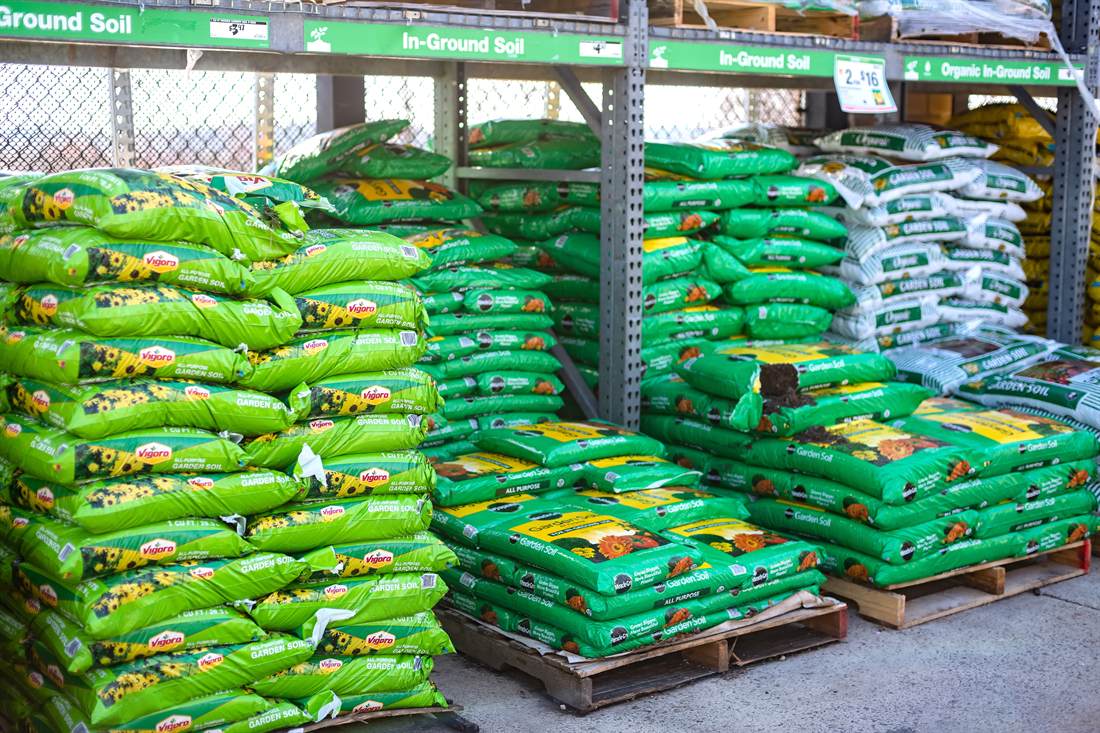
50 kg bags. Dragged, stacked, dropped and left in the sun. The code has to still work at the end of it.
What goes wrong
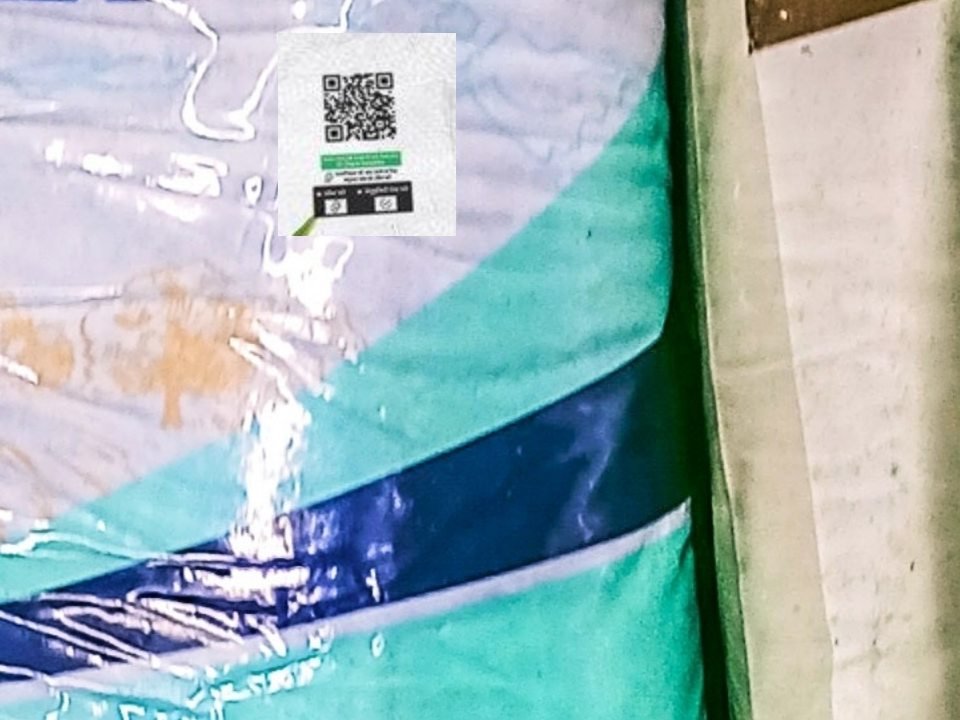
- The printed design is sealed inside. It is printed on the BOPP film, then turned inward onto the weave. It can never carry a different code on each bag.
- The outside was never treated. Plain polypropylene at about 30 dyne. This is why codes rub off fertiliser bags.
- The weave is coarser than the code. Tapes sit 1.8 to 2.5 mm apart. One block of a QR code is four to six times smaller.
- The bag bends, and the code bends with it. Stacked, dropped and pressed, in heat and rain. A bent grid stops reading.
- Dark artwork leaves no contrast. A dark code on a dark bag is invisible to a phone.
What we do
- We print inside the laminate, and that is what we recommend. The code goes on the BOPP film before it is laminated to the weave, so it sits under the film. Nothing can rub it off, and nobody can peel it off and move it to another bag.
- If your bags are already made, we print on the outside. Most suppliers can only do one of the two. We do both, so ready stock is not a reason to wait.
- We keep a white matt box in the printing cylinder. It fixes contrast and shine together, and costs nothing per bag once the cylinder is cut.
- We use solvent ink made for untreated polypropylene. Not an ink chosen for an average surface.
- We seal and air-purge the print head. A bagging plant is full of dust. Without this the head blocks mid-shift.
- We use pigment ink, not dye. These bags live outside. Dye fades.
Which printer goes on your line
Four ways to put a unique code on a pack. The material decides which one, not the price list.
Thermal inkjet (TIJ)
The highest resolution of the non-contact options, which matters for a dense QR code. Ink comes in a sealed cartridge, so plant dust has nowhere to get in. It needs the surface close and reasonably steady.
Continuous inkjet (CIJ)
Rugged and non-contact, with fast-drying solvent inks that hold on untreated plastic. It copes with dust, heat and long runs. The mark is built from separate dots, so code size has to be set with care.
Thermal transfer (TTO)
Prints onto flat film before the pack is formed, and gives a very sharp code. It touches the surface, so it needs a flat web and cannot print onto a filled bag.
Laser marking
No ink, no consumables, and nothing that can rub off. It marks the surface itself or a coating made for it, so the material has to be chosen for laser from the start.
How we prove it worked
- We measure, we do not just scan. A camera that reads a code tells you it worked once, on that camera, in that light. A grade is a measurement against a standard.
- We state the conditions with the grade. A grade with no aperture and no light colour means nothing. The same code measured another way gives another number.
- We check in the lab and on the line. The lab check is exact but only sees samples. The line check sees every pack. You need both to know what is really going out.
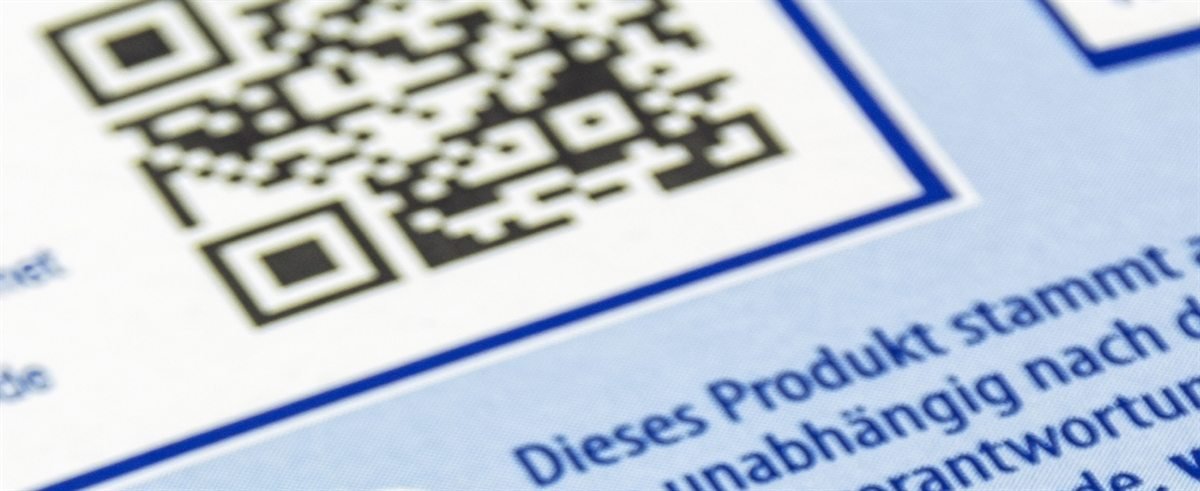
Printing is the half you can see
Getting a code to survive a shrink tunnel or a 50 kg sack is the craft. It is not the point. The point is that every pack carries an identity nobody can copy, and that you can see what happens to it afterwards.
So we do both halves. The coder on your line and the system behind the code come from us, on one price per code printed. There is no second vendor to manage, and no gap between the printing and the tracking for a problem to fall into.
Codes that cannot be guessed
Non-sequential and generated at source, so one code tells a counterfeiter nothing about the next.
Every scan, on a map
Where and when each pack was scanned, with duplicate-scan clusters flagged automatically.
A plain answer for the buyer
A scan returns genuine or suspicious. No app to install, on any phone camera.
Send us your packaging
Send the finished pack, filled if you can. A flat sample sheet hides the problems that show up in the market. We will tell you what size the code needs to be, where it can go, and what has to change on your line.
Contact us